

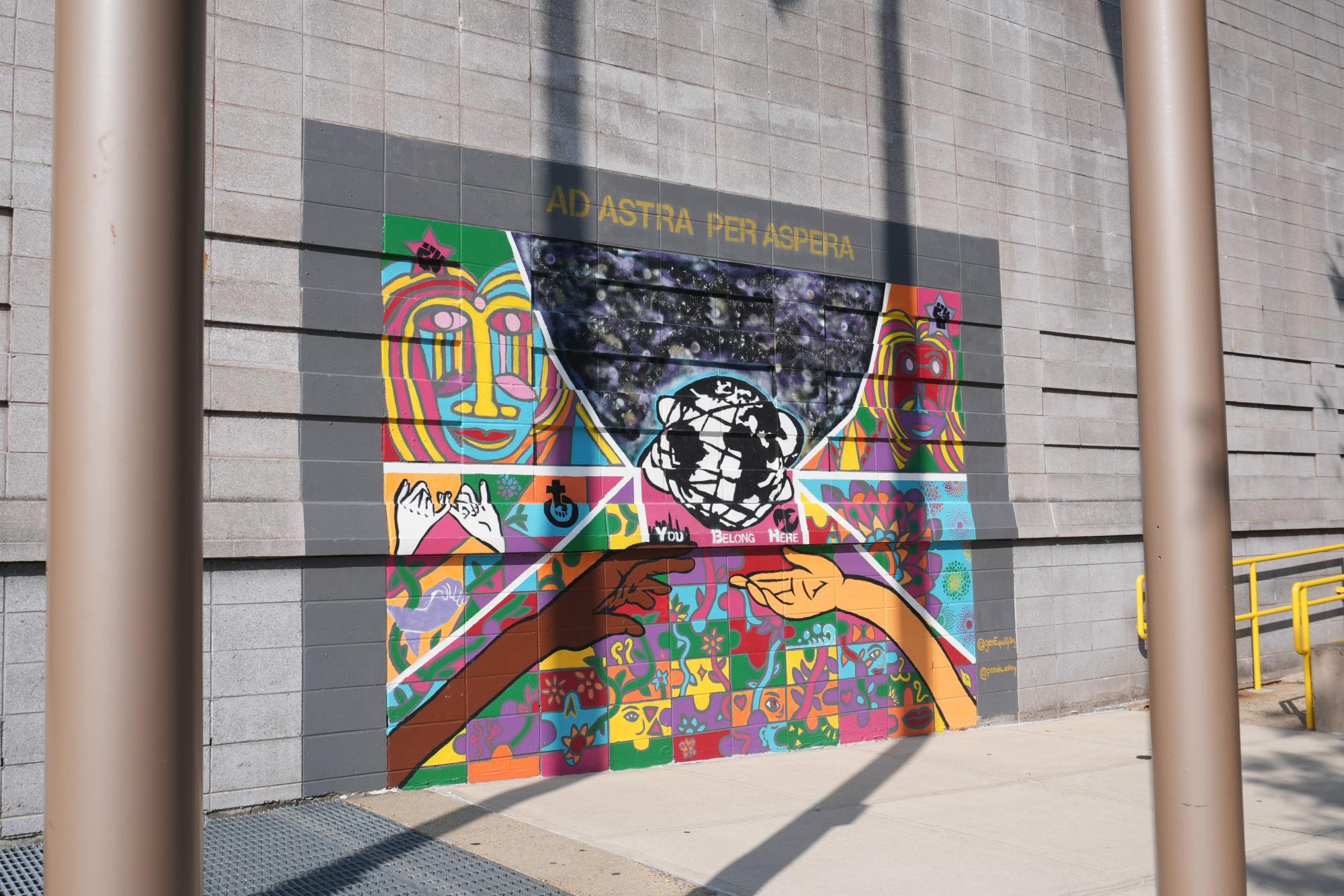

Restorative justice has been used in American criminal courts since the 1970s, but it has only recently been used in public schools as an alternative approach to traditional methods of discipline. Rather than opting solely for punishment in student misbehavior, Townsend Harris High School is using restorative justice that aims to repair harm in conflicts. Yet, despite its growing use throughout the New York City Department of Education, with 972 schools at last count implementing restorative justice programming, many students are unfamiliar with what restorative justice actually is and how it works.
Some restorative justice practices include restorative circles, peer mediation, facilitated conferences, harm-repair agreements, and community-building activities. According to Guidance Counselor Sara Skoda, these practices focus on “mediating between students when [a conflict] might have occurred. I think it depends on the severity of the thing that occurred, but I would say we’ve done a lot of mediative practices within that model.”
“[Restorative justice is] not about looking for punishment and a negative disciplinary action that takes place. We look at the whole picture. What happened? Why might this have happened?” said Ms. Skoda. “[We try] implementing supports for a person who might have been affected by something, or actually was the offender, and try to give them supports that will help them move forward.”
Traditional disciplinary methods ask, “What rule was broken, and what is the punishment?” In contrast, restorative justice asks, “Who was harmed, how were they affected, and what needs to happen in order to repair that harm?”
Federal guidance from the U.S. Department of Education has encouraged schools to move away from exclusionary practices such as detention, suspension, and expulsions that harm school climate in favor of alternatives that address the root cause of conflict. Restorative justice practices challenge schools to see students not as problems to be managed, but as individuals capable of growth.
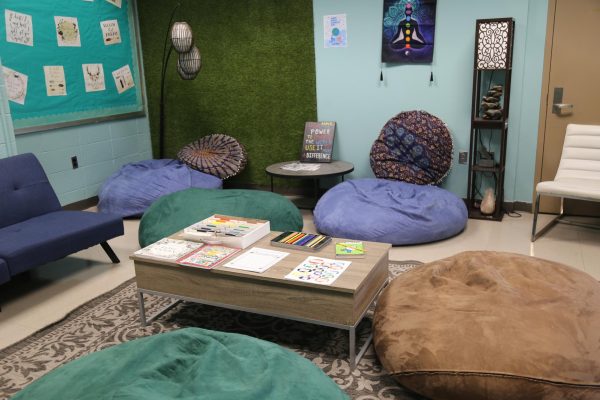
One restorative justice practice THHS uses is restorative circles. These circles are structured conversations led by a mediator, where students involved in conflicts discuss the situation, its impacts, and ways to move forward. These mediators are trained in restorative justice and can be teachers, guidance counselors, deans, social workers, assistant principals, or restorative justice coordinators depending on the situation.
Guidance Counselor Anthony Santos said, “A lot of students want to do a restorative circle because they figure, ‘hey, I’m going to be in class with you again.’… So how do we move past [this] and how do we work together?”
Still, some students may not feel comfortable participating in a restorative circle. To help students feel supported in the process, restorative justice facilitators adapt to ensure that all individuals involved feel comfortable.
Shikira Chang, Assistant Principal of Pupil Personnel Services, said, “When I conduct circles, I ask students if they want to invite an adult or peers to the discussion. Sometimes this person is a support system…If a student is not comfortable speaking with someone involved in the harm, it may be necessary to hold an initial meeting with an RJ facilitator and later with the person who was involved.”
Despite facilitator efforts to foster a supportive and open environment, the success of restorative circles ultimately rely on the participants’ willingness to engage.
For Mr. Santos, the biggest challenge to putting restorative justice into practice is when a student does not want to participate in a restorative circle with an open mind. “If you’re not willing to listen, if you’re not willing to talk or at least hear out this other person, [the circle is] not going to be successful.”
Although there isn’t a definitive list of which actions receive restorative justice versus punishment, Dean Ian Morzan said restorative justice at THHS is used on a case-to-case basis. He said that students “may be violating the Chancellor’s regulations, but these students are not criminals.”
“We make two assumptions about Townsend Harris students here. One, that they’re well intentioned, and two, that they’re highly intelligent. It’s easy to see when something is off,…when a student cuts a class, [or] when there’s academic dishonesty. When we see these things, they have to be addressed…And so that’s what we attempt to do.”
Similarly, Ms. Skoda said, “We even try to incorporate [restorative justice] into many different types of meetings and things, not just when maybe a student is in trouble for something, but maybe when a student might be struggling academically or having a hard time returning back to school.”
In fact, the approach can be beneficial even when no actual rules have been broken, but when, for instance, there are social difficulties in friend groups. Mr. Santos described how restorative justice might be used in a common student conflict as a preventative response.
“So let’s say we have three students who got in an altercation because they’re all friends, but friend A is talking to friend B about friend C. Now friend C is hurt because their two friends are talking and gossiping about them. So part of [restorative justice] is we sit down and we talk about accountability…Part of that is [asking] why are we talking about our friends, setting clear boundaries and setting clear rules, and seeing how we can move forward. We’re trying to figure out how we avoid these things escalating and making sure that we walk out of here feeling okay and feeling heard.”
This approach focuses on creating a space for students to feel supported, work through challenges, and reintegrate smoothly into the school community.
When the concept of restorative justice was explained to THHS students, they had mixed opinions about it.
Freshman Emily Huang said that while conversation could be more effective than punishment, “many kids don’t want to talk because there’s a stigma around it being cringy or cheesy.”
Sophomore Eunbe Choe said she felt like school discipline policies are often implied rather than clearly explained “because the students are supposed to be good.” At school, students are expected to act responsibly, which can make rules feel unspoken.
Eunbe said that restorative justice is only effective when students are able to understand their faults in conflicts. “I don’t agree with replacing our entire discipline system with [restorative justice]. I still believe detention should exist, but I think that it would be a good thing if teachers put more effort into really getting into the problem as to why someone did something.”
But some students have more positive feelings about restorative justice practices such as restorative circles. Junior Sunny Chen said, “On the surface level, students don’t really benefit from detention… because they’re just sitting in a room. I feel like [restorative justice practices] would make [students] more open to communication, talking about their own feelings, and what they went through, instead of showing their emotions through actions that might harm others.”
Senior Angelica Mendieta said that a restorative circle is more effective than punitive methods because “I feel like you can get a better understanding of both sides instead of just one.” She added that not every conflict works with restorative justice, and some cases may need other approaches.
Restorative justice isn’t always the solution, though, according to Ms. Skoda. “The truth is sometimes certain offenses are just bad. Certain things still need to happen in the long run. But I do think that [restorative justice] can be implemented in everything that we do, even if there needs to be a bigger punishment,” she said.