


![Incoming Student Union President junior Aki Bejamin and other SU candidates sitting on stage while waiting to give their speeches during the May 18 SU Debate. Aki said he plans to “burn [the SU] all down and start anew.”](https://thhsclassic.com/wp-content/uploads/2026/06/IMG_9600-e1782439128607.jpg)
This spring, current Club Liaison Aki Benjamin launched his unopposed campaign to become the 2026-2027 Student Union President with a bold claim.
“The Student Union is broken,” he wrote in his campaign announcement. “It’s not working for students, and I’m saying that as someone who’s been on the SU and internally fought for two years.”
Aki later expanded on these claims, describing the SU as being afflicted by “abuses of power, corruption, and petty conflict.” He pledged to “burn [the SU] all down and start anew.” The Classic asked multiple members of the Student Union to assess these claims in a series of interviews, leading to a rare series of reflections from members on the role of the SU, its limitations, and its possibilities.
Aki said he would “decline to comment” when pressed to provide specific examples of corruption, instead saying “there has been fighting over things that I don’t think it has made sense to fight about, and that it feels like we are fighting over issues that solely for the purpose of trying to get our own voice in there, rather than for the actual reason of like trying to do something better for the students.”
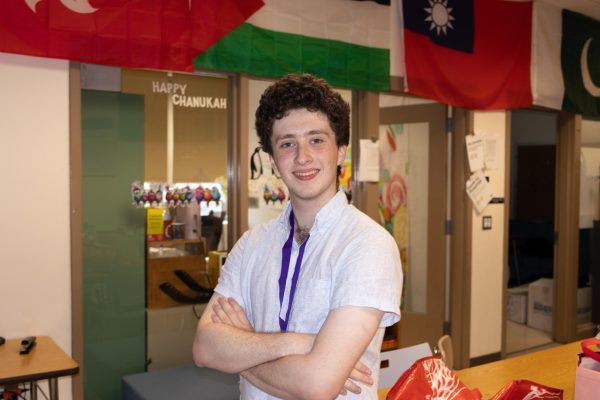
Aki later reached out to The Classic to provide more specific examples of his claim, detailing an example involving SU members not attending a key meeting, particularly one about a plan for club elections this year, and then later wanting to overrule decisions made at the meeting. He said, “As SU president, I want to make sure that I am always there if there’s a decision that I need to make.” He said he also wants to ensure that all SU leaders are trusted to do the jobs they have been elected to do.
Current members of the SU leadership disputed Aki’s overall characterization.
Outgoing SU President Jenna Abdelhamid said, “I tried my best to go away from [instances of bias and petty conflict] and set a precedent for how to actually handle those situations…We made efforts to continue that tradition of checking in with our board members constantly to make sure that they felt like the culture on the board was also something that was positive.”
Jenna said that under her leadership, she instituted several reforms addressed toward reducing conflict and self-interest. She said, “I think as president, compared to prior years, I’ve been way more involved with auditing and checking in with all of the positions’ work.”
In response to Aki’s claim that the SU is “a group of students who’s very self-directed, very self-interested,” outgoing SU Vice President Evelene Chao said, “We’re all teenagers, we make mistakes…However, I don’t think it really defines us as a group of people.”
Other members agreed that parts of the organization need improvement. Incoming Club Liaison sophomore Tajrian Noor said, “we’re letting very internal conflicts…come into a professional workspace.” Incoming Secretary sophomore Siddhini Singh said, “If we just collaborated more…any issue that we faced this year would have been non-existent.”
Tajrian said, “What I think [Aki] means by [abuses of power, corruption, and petty conflict] is that the upperclassmen may act like dictators in trying to have the younger people do their work for them.” She said, “What I’ve seen is that the younger side on the board, just because I’m a sophomore, sometimes it is kind of hard to get my own voice heard.”
In reflecting on the SU’s 2025-2026 term, Evelene said, “Even if the experience this year wasn’t the best, I do think that it’s a great learning experience and that you gain a lot of not only opportunities and relationships, but it’s really eye-opening.”
Incoming Senior Class President junior Jordana Lo agreed that the SU “definitely has a lot that [it] can fix in terms of communication and trust for our body,” and said that there is “a lot of disconnect” with the student body. However, she said that she found that some of the conflict detailed by her peers could be constructive. “I think that in any kind of really tight knit group of students there is going to be conflict, but a lot of times I do think those are healthy conflicts. In a way, they’re very constructive.”
Regarding Aki’s call to “burn” the SU down and start anew, Principal Brian Condon said, “I don’t believe in burning things down. If you burn things down, all you have left is ashes. So, what do you rebuild with?… What I would say is, sometimes you have to take things down to the studs.”
As part of his description of the SU as “broken,” Aki also made the claim that the Student Union is “more of an admin mouthpiece than a body.”
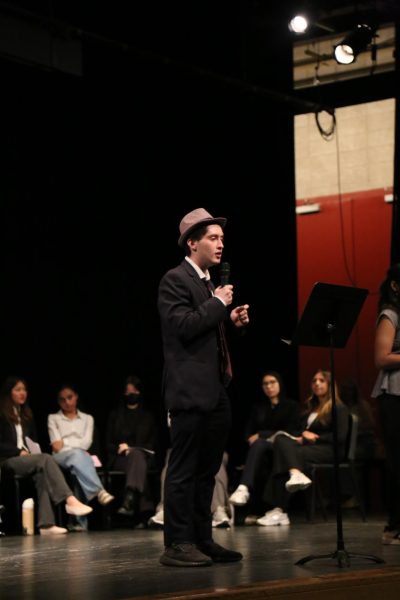
Mr. Condon said that he disagreed with that characterization “completely,” saying that he has never directed student leaders to deliver a message on his behalf.
“I think that the administration has always been willing to have a productive dialogue with students, and if the SU feels that they are not representing the students well enough, that’s a question for them, not for me.”
In a follow-up interview, Aki clarified that this statement was not intended to be a criticism of administration, but rather, of the Student Union. “We’re allowing ourselves to become more of [a group that speaks] from top down instead of bottom up,” Aki said. “We’re speaking for admin to the students instead of for students to the admin.”
Students shared a range of perspectives about the SU’s effectiveness.
Some students said that the SU this year has fulfilled its role in supporting the student body. Senior Ditya Mehta said, “As a senior, this year specifically with funding, I have seen the board work with school staff to fundraise for lower senior dues and prices for prom and such events which has personally helped me out a lot with finances.”
However, not all students said they feel informed about the SU’s work throughout the year. Senior Angela Lee said, “I’m not very well acquainted with what the SU does, and although I’m sure it’s a lot of the behind-the-scenes work, I think it’d be nice if they informed us of changes or decisions better.”
Sophomore Eunbe Choe said she feels the SU does not effectively represent the student body and that “there is always room for improvement.” She said, “I think the SU’s policies are aimed to help support students, but their implementation falls short of achieving that goal.”
Referring to the new club policies that Aki oversaw this year, Eunbe said she also saw room for improvement. “I felt that these policies were passed without truly conducting research on what the student body felt,” Eunbe said. “How many actual students said they wanted xyz to be passed, and what changes were made to ensure that these policies aligned with every club?”
For sophomore Olivia Perla, she said that the new club application process was “extremely fair.” She proposed a new club, Living in Music, which advanced to the third and final stage of the application process, but was ultimately denied.
Olivia said, “We made it very far in the application process and received feedback from a variety of people. The feedback was supportive, constructive, and helped us understand the weaknesses in our proposal.”
Similarly, junior Faujia Ibnat said she wanted to create an architecture club and proceeded to the final stage as well. Although “[the SU] didn’t exactly tell us why [the club] was denied,” she said, “I think the club application and review process was very fair and just. I think it did separate people who actually wanted to start a club and were committed to doing so, rather than people who weren’t as committed.”
Mr. Condon connected his statement of taking things “down to the studs,” which he defined as getting “rid of all of the stuff that you see on the surface, and [getting] down to the main structure,” to Aki’s future goals.
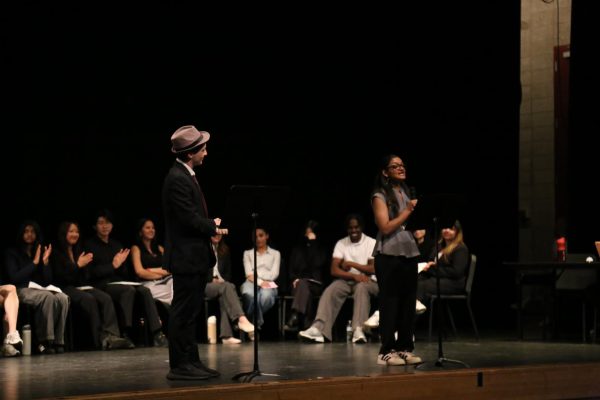
Junior Uma Hardeo, the incoming SU Vice President who ran with Aki, said that she and Aki’s plan is to have “policies put into place and bylaws” next year that will set clear expectations for SU board members.
Uma said, “If [members] aren’t conducting their responsibilities, we know that that is because they have self-interest because they don’t want to actually put in work, but they want to just have the role.”
She described a procedure for maintaining integrity on the board as a circumstantial “three-strike” process which will “make sure that we are holding everyone accountable.” This process will include a warning, a meeting, and then further action depending on the severity of the issue, which could involve removal from power.
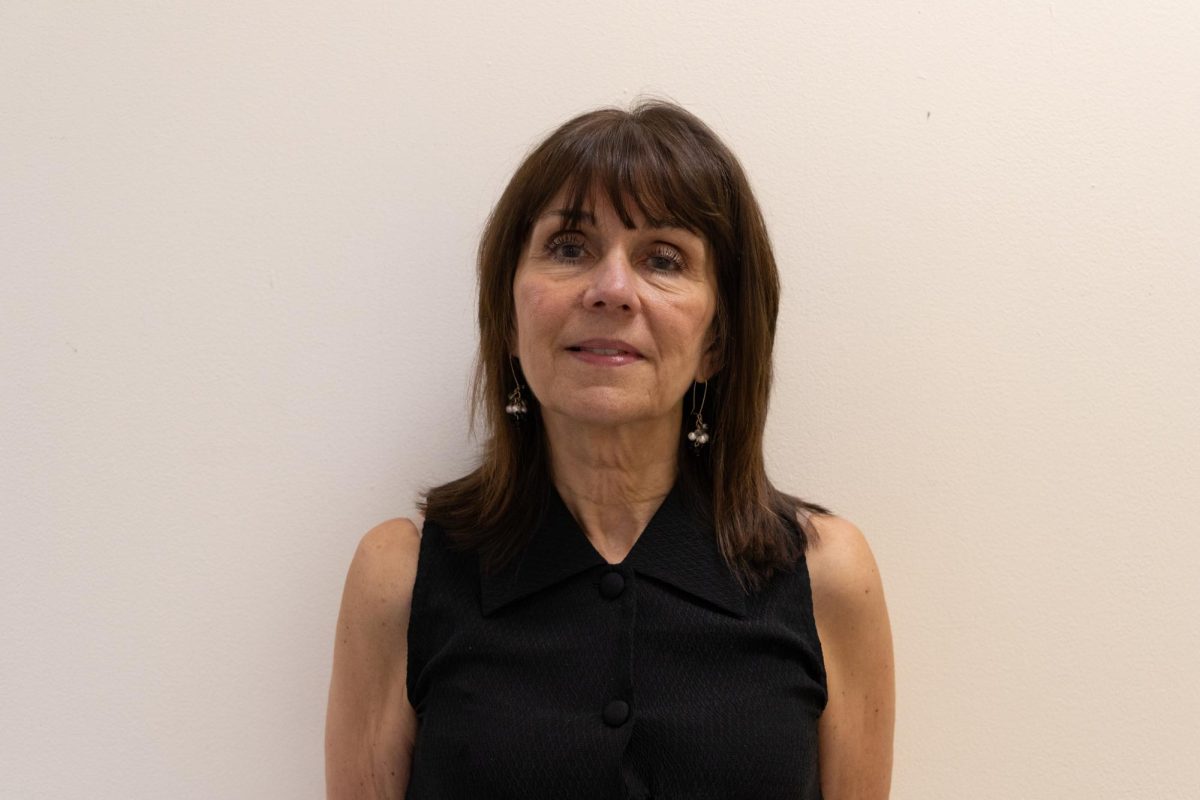
In an emailed statement, Coordinator of Student Activities Jaime Baranoff said, “I’m excited to see how Aki will look to transform and improve the Student Union during his year as President.”
As Aki and Uma step into their roles next year, The Classic will follow up with how their plans take shape in practice and the impacts of their decisions on the student body and SU.

Aki Benjamin, SU President • Jun 25, 2026 at 10:07 pm
I know I’m not perfect, but I do hope that you all put trust into me for this next year. I’m going to try to be more representative of the students, and the student body should always feel free to reach out to me with comments and suggestions!