



















With New York State’s “distraction-free schools” law in effect as of the start of the school year, Townsend Harris High School has provided all students with velcro pouches to store their smartphones in for the entirety of the school day.
In advance of September, all school districts in New York had to come up with policies that complied with the new law, and earlier this summer, New York City Public Schools released an updated regulation on smartphones and electronic devices. The regulation provides guidance on how each individual school can choose to restrict devices. According to an email sent to all students in August by Assistant Principal of Organization Ellen Fee, the THHS policy aims to create a, “focused, respectful, and personally connected learning environment” by requiring students to secure their cell phones in velcro pouches and limiting the usage of internet-enabled devices throughout the building.
According to Ms. Fee, the process of creating the THHS-specific policy involved communication with parents, students, and teachers, as well as reaching out to schools that had already implemented phone restriction policies before the new law passed. Though many schools use locked pouches that more heavily restrict access to phones, the administration ultimately decided against that option.
“The thing that guided our discussions was feasibility and reality,” Ms. Fee told The Classic. “The feasibility of having a locked pouch, we believed, would be too difficult for entry and dismissal and not necessary because we have students here at Townsend Harris who are compliant with rules and regulations. Then [with the] issue of pricing, velcro pouches were much cheaper.”
Students were quick to describe the pouches as ineffectual and unnecessary in interviews with The Classic. One student said that students who followed the rules kept their phones stored in the pouch, but those intent on breaking the rules could do so easily because of the velcro.
Ms. Fee said the school chose simpler pouches so that students could access their devices if teachers wanted them to have access during class. The city regulations allow for school administrations to permit the use of personal electronic devices in class if it’s for a “specific educational purpose,” and locked pouches would make such uses difficult.
“There’s the reality of teachers saying that they would like the autonomy to be able to decide whether or not this was an instructional device or whether or not it was a distraction,” said Ms. Fee. “And by giving teachers the autonomy and authority to make that decision, we felt like that would serve our school best.”
Townsend Harris has multiple computer labs and Chromebook carts, but not every student has an internet-enabled, school-provided device during the school day. With personal devices like laptops and tablets also being part of the ban, students might not be able to complete certain technology-based classroom activities without having access to a personal device.
“We don’t have a device in every classroom for every student,” said social studies teacher Eleni Sardiña. “While I could try to make everything paper-oriented for a class, there’s just going to be times that digital means are required to engage in certain activities.”
“I still plan on using devices, particularly during lab activities where students use [devices] to make measurements with video and connect to our bluetooth sensors,” said science teacher David Stern. “But beyond that, I have yet to be concerned that students are going to be on their devices, doing non-class related things during instructional time.”
The single largest concern of students who spoke to The Classic about the new policy involved how the ban impacts their ability to be productive during the school day.
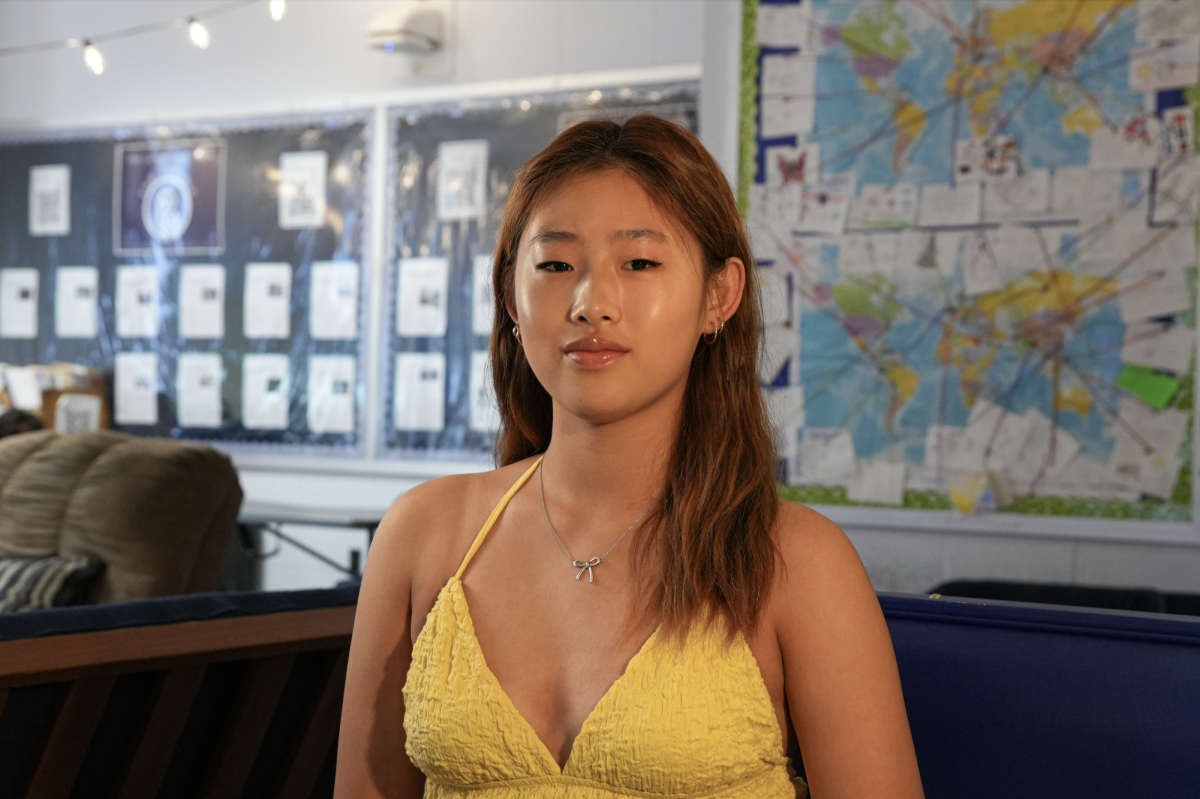
Senior Angela Lee said that all of her teachers continue to use Google Classroom as a hub for notes, study materials, and assignments. With so many digital classroom materials, the new ban limits students’ ability to study and get work done during free periods if they don’t have approved devices, she said. “What are students supposed to use to study with?” she asked.
“I used to use my phone to see my schedule and access my to-do lists, but now I can’t,” said junior Pekko Hau. “Yes, there are alternatives, but that was my main way of keeping myself up to date with deadlines.”
Freshman Sofia Starcic said THHS “handled [devising a policy] in the best way possible” given the state and city requirements, but she was critical of the overall law: “Phones are everywhere in our daily lives, and I don’t think we’re really learning anything about how to deal with the distraction by just taking it away altogether.”
Few students had much to say about the law’s intended impact of improving in-person social engagement with peers.
One senior begrudgingly admitted to socializing more due to the policy but focused most of their comments on criticizing the school-issued pouches as redundant and examples of wasteful spending.
Ms. Sardiña said she has noticed students being more connected in class.
“One thing I’ve noticed is just a lot more engagement before and after a lesson, so students tend to turn and talk a lot more,” she said. “There’s something about habits that fall into place, even when we don’t necessarily find them life-altering. Something about putting a phone in a pouch signals to us that this is the time to be with other people. And I think that that will help interpersonal relationships in classrooms.”
Junior Miriam Berman said the policy had “lessened the urge to go on my phone,” but contended that students should be able to choose to use devices in the cafeteria and during free bands.
Requests for the school to ease restrictions on the ban during frees and lunch periods was a common refrain in multiple conversations with students.
Ms. Fee said it was out of the school’s control. “It’s a state rule, which means the city has to follow it, which means Townsend Harris must follow it. It’s a directive.”
With these new changes to be enforced throughout the school year, it will take time for all to adjust, adults in the building maintain.
“I hear students say, ‘I don’t know what to look at. I’m just looking at my hands now. This is so awkward. I don’t know what to look at,’” said Ms. Fee. “I think that’s humorous, but also telling of our culture, and how often we look to our phone when our mind is bored. Now, without that, we’re going to have to find new ways to engage our minds without that device.”
“I get it. In my own life, I am also, outside of school, very attached to my phone. I’m always checking it for messages from family members, and seeing updates from friends,” said Mr. Stern. “But at the same time, the long term benefits are going to be students who have more focus and can accomplish more and go farther because of it.”