

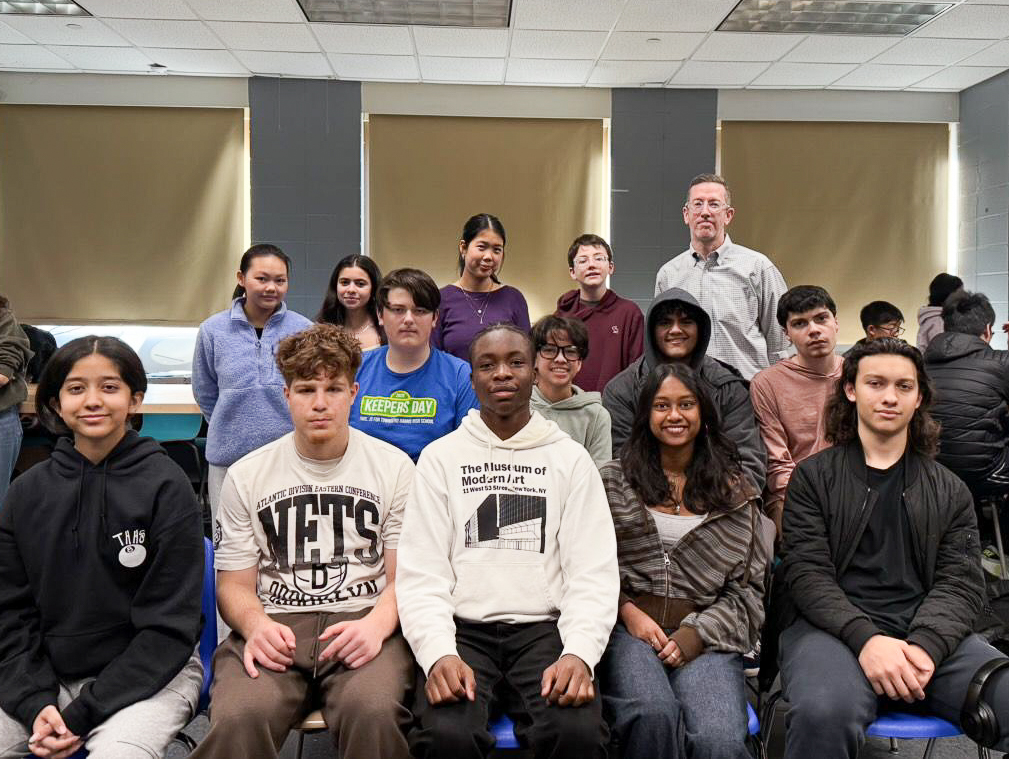


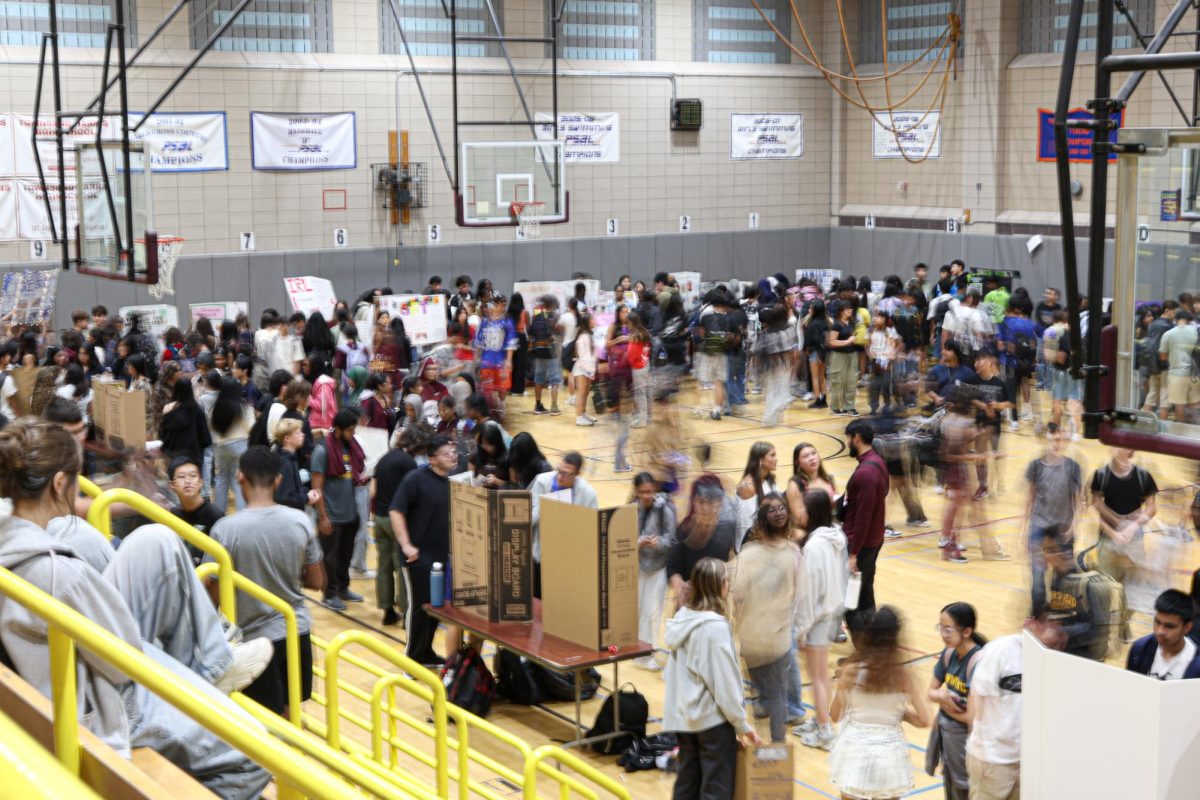

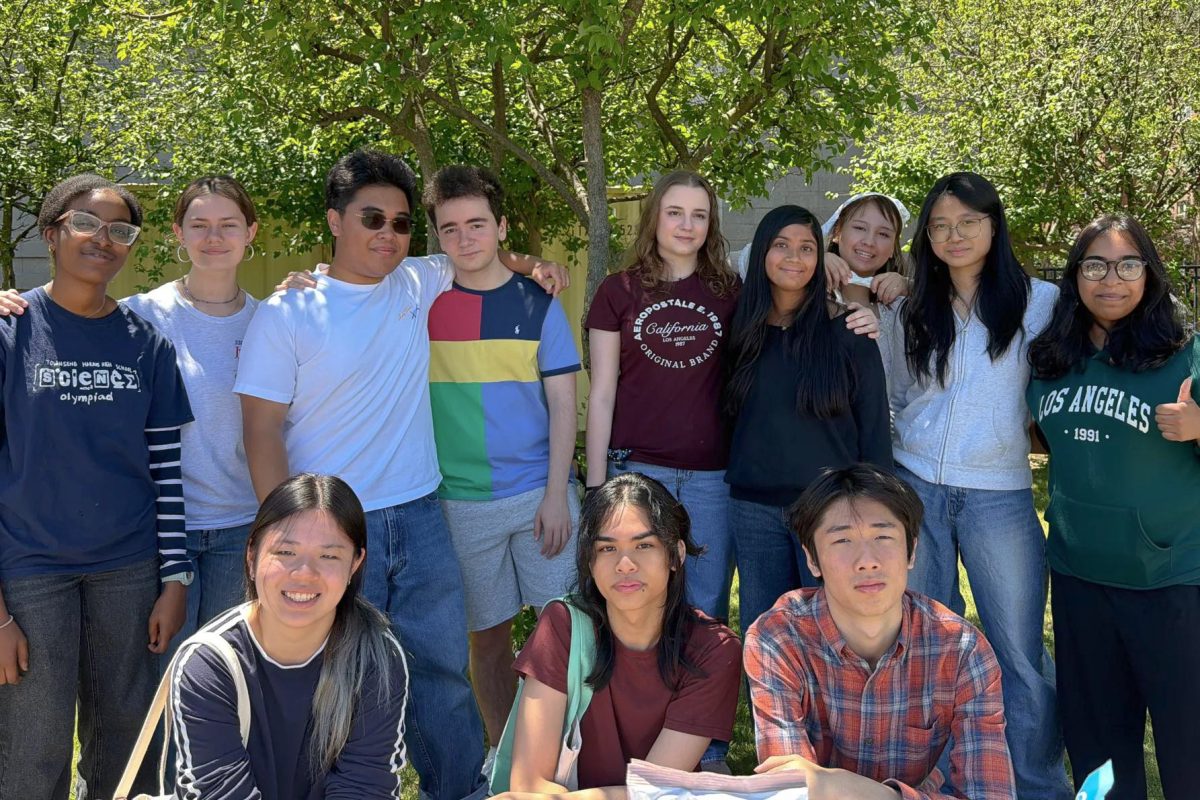
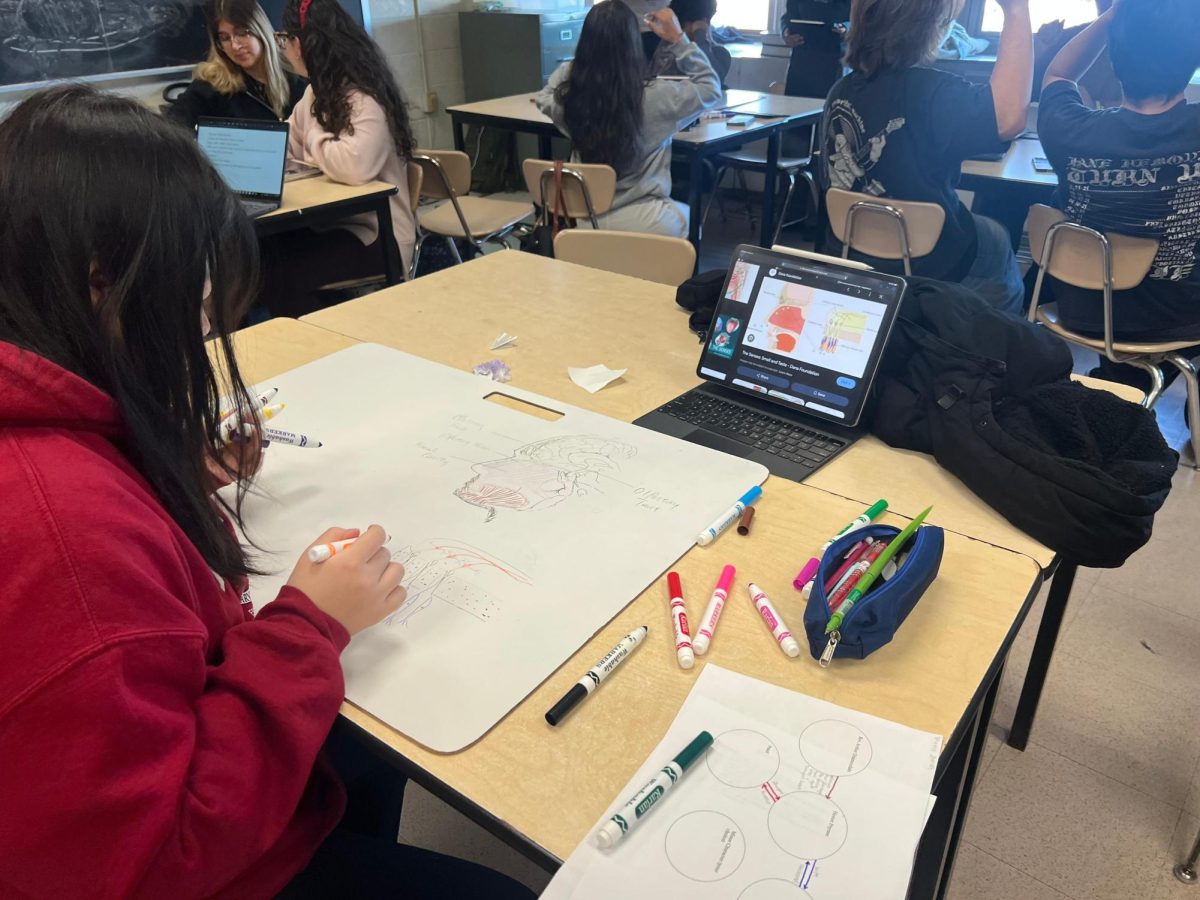

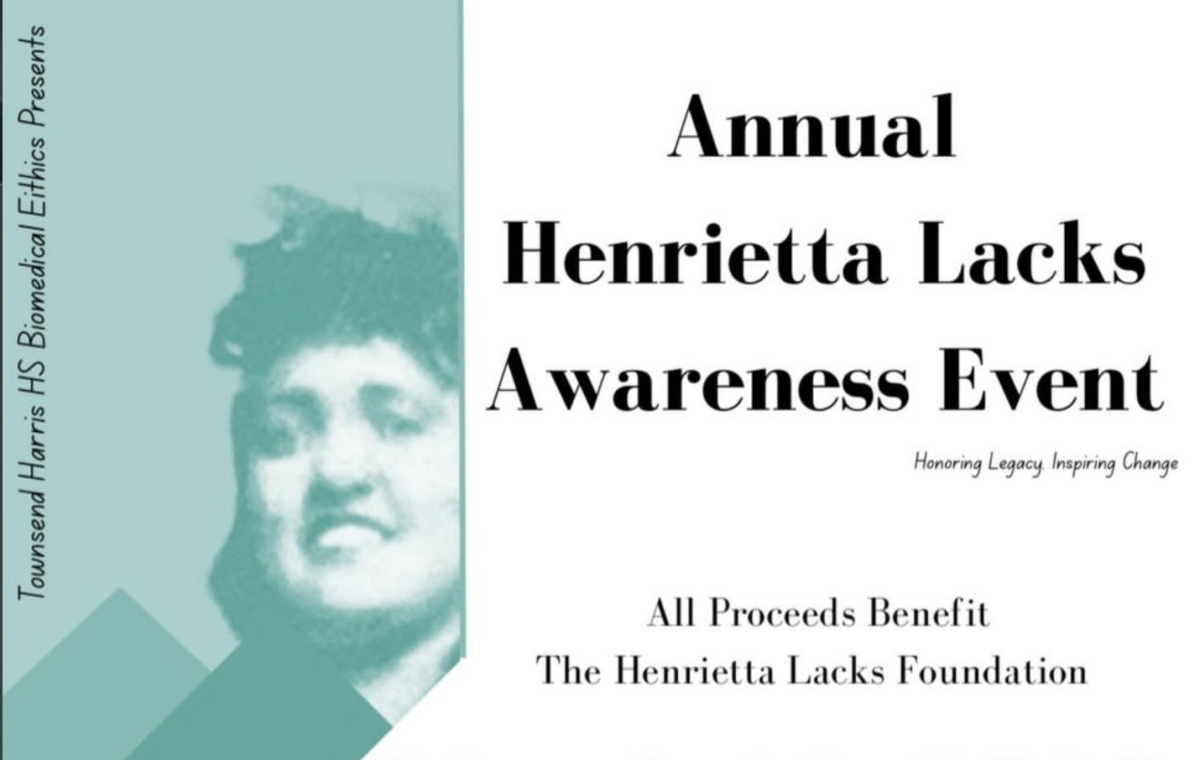
For students in this year’s bioethics class, the annual Henrietta Lacks event represents the culmination of weeks of studying the life and legacy of Henrietta Lacks, whose cancer cells were taken without her knowledge in 1951 and became one of the most important tools in modern medical research. In addition to learning the science and the story of Henrietta Lacks, students also work to bring the annual event to life.
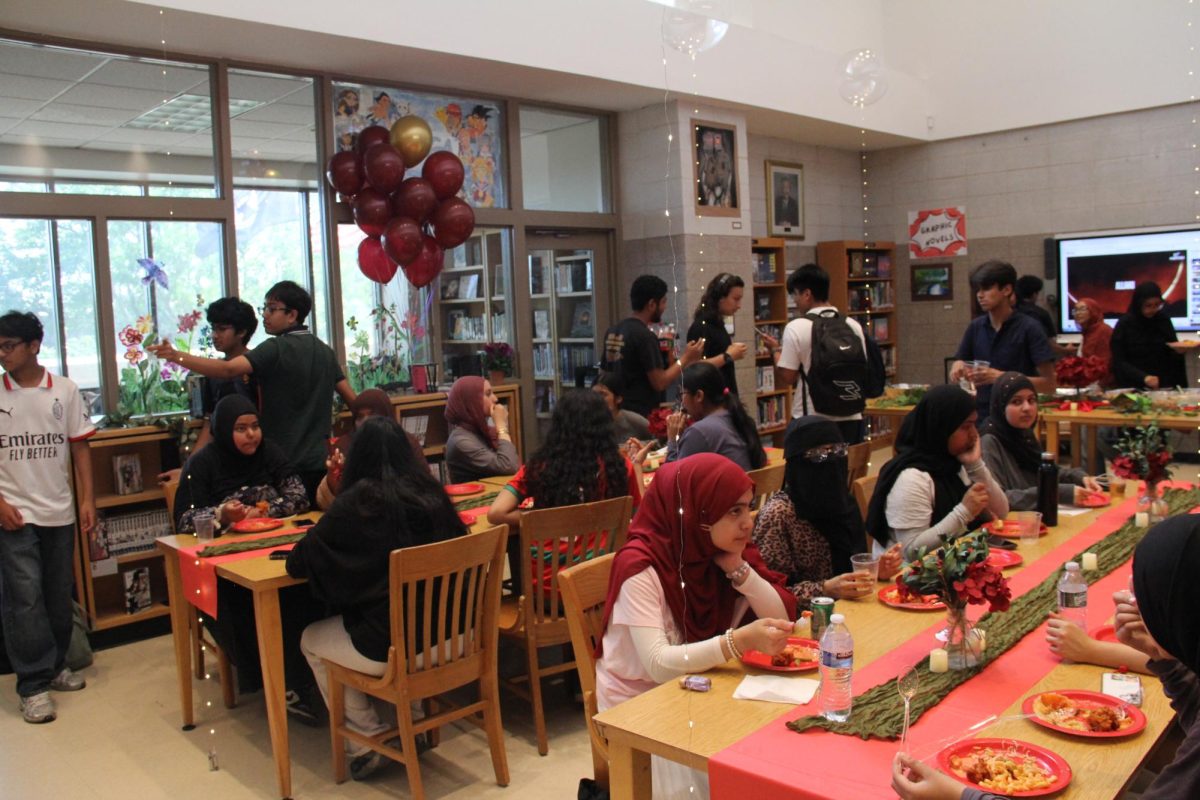
To foster conversation about Lacks’s legacy and to raise funds for individuals impacted by cancer, student organize the annual event with guidance from bioethics teachers Sarah Loew and Valeria Jacobs. Preparations begin with students reading articles, watching documentaries, and debating ethical questions about patient rights and medical research. They are then grouped into three committees to prepare for the event: spirit, public relations, and fundraising.
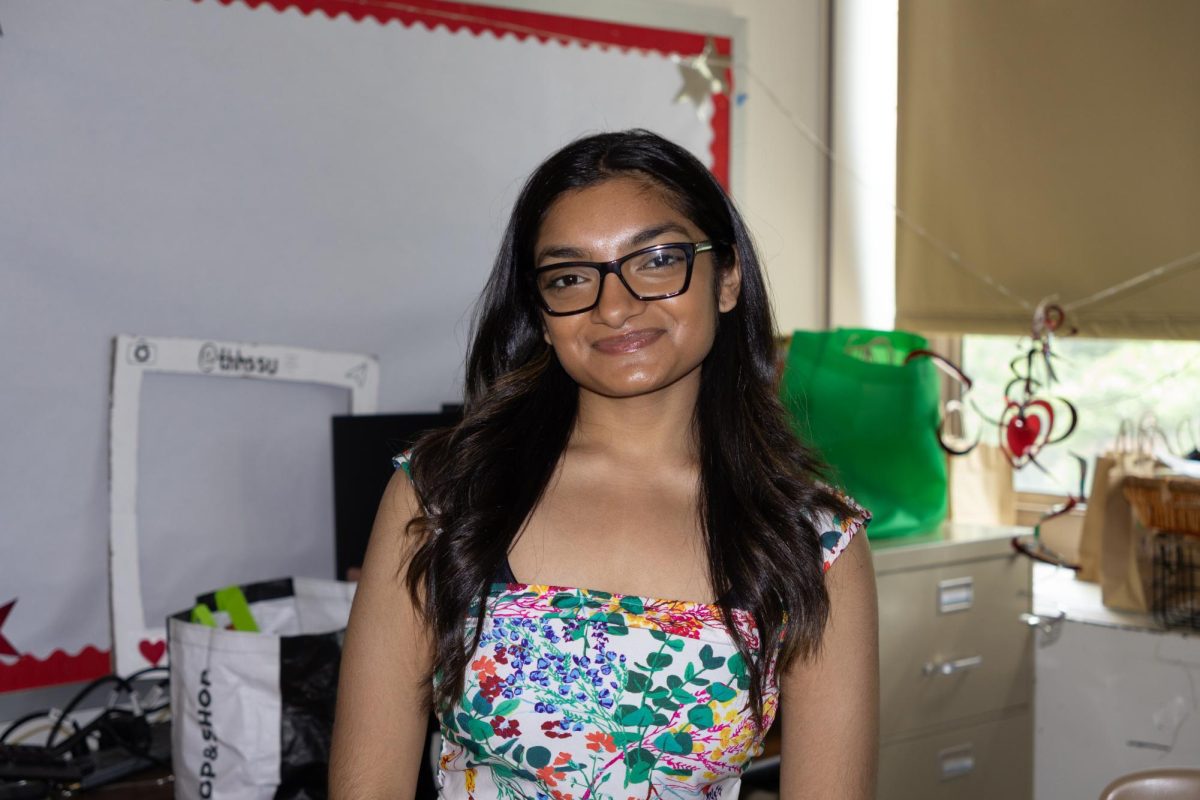
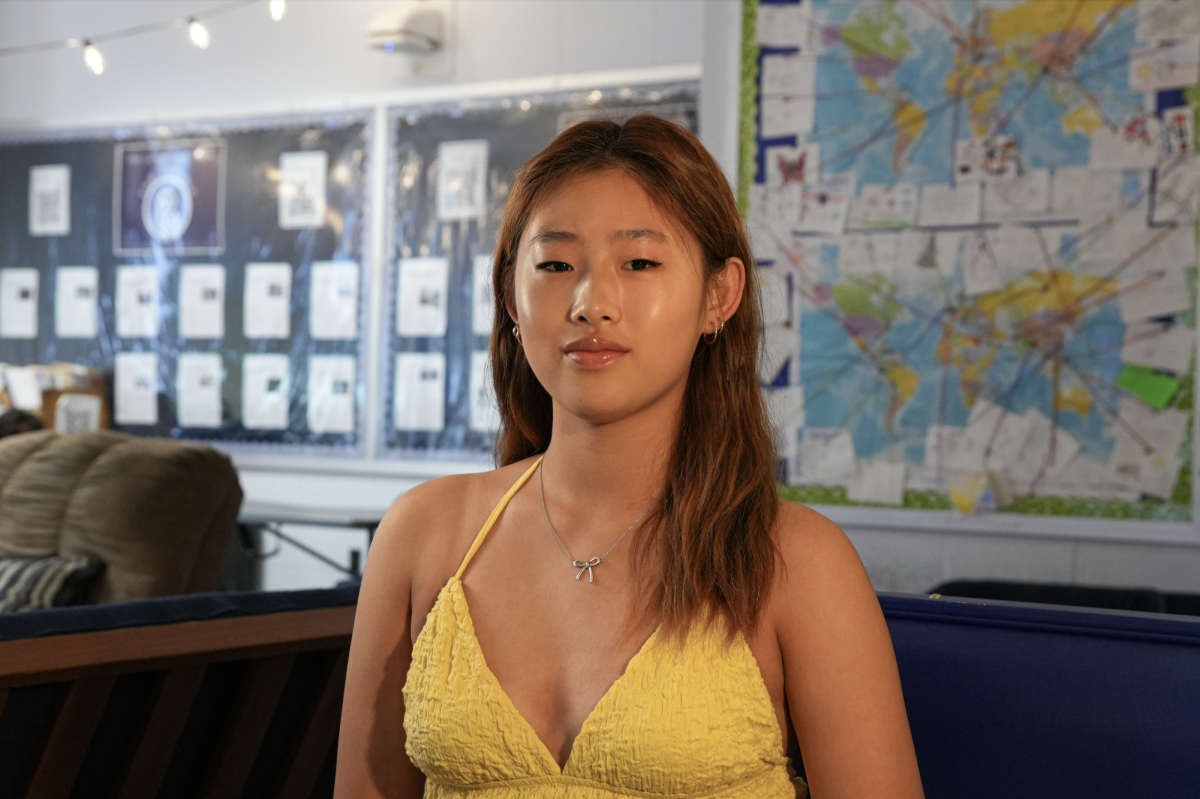
Senior Denilia Santiago said the planning process involved brainstorming ideas for activities that attendees could participate in.
Senior Jade Deen, another student organizer, said that “the event fundraised a good amount of money.” She said that they had a goal of having everyone in class sell three tickets a person but, according to Jade, “a lot of them sold more.”
Tickets were priced at $5 each, and discounted to $12 when bought in bundles of three. Students who participated also received three hours of community service hours.
According to Ms. Loew, by the end of this year’s event, the class raised nearly $500 and created gift bags for 50 people who are cancer patients.
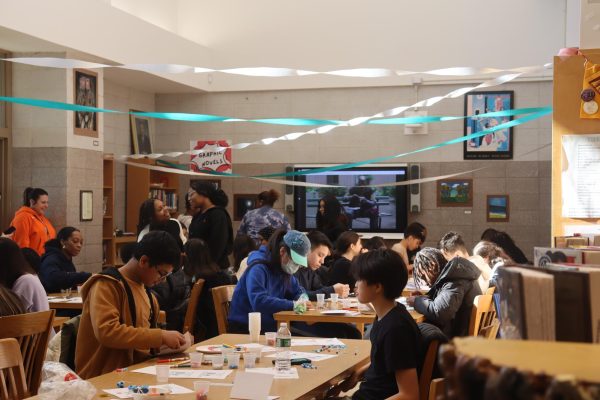
Ms. Loew said that a new feature of this year’s event was a ‘paint and dip’ workshop run by art teacher Tony Montalvo. “Mr. Montalvo instructed students on how to make a canvas painting while snacking on a variety of chips, pretzels, veggies, and dips,” Ms. Loew said. “We’d like to say a huge thank you to Mr. Montalvo for embracing and supporting this new endeavor.” She said another new feature was a scavenger hunt with prizes.
Denilia said that the event was executed to not only support the Lacks Foundation, but to also raise awareness of her contributions: “What makes this event different from others is the fact that all of the proceeds go toward the Lacks Foundation.” She said it’s also relevant that March is Women’s History Month.
Ms. Lacks was an African American woman whose cervical cancer cells were taken without her knowledge by Johns Hopkins University for science research purposes. Her cells, commonly referred to as “HeLa” cells, proved to be uniquely resilient and were exploited to study cell behavior, viruses, and diseases. HeLa cells have helped scientists develop vaccines and advance cancer research, yet her family went decades without recognition or compensation.
“We hope participants have the opportunity to learn about the importance of informed consent in the science research process,” Ms. Loew said, “and give back to the community by making bracelets and canvas bags for cancer patients and raising awareness and funding for the Henrietta Lacks Foundation.”
“It changed my perspective on medicine,” junior Mila Lyssikatos said. “I realized so many innovations in STEM are attributed to her cells, yet she was never properly compensated or given credit.”
In addition to learning about the life of Ms. Lacks, students also learn about how to put on an event that promotes discourse about important ethical topics related to science.
“The students have developed interpersonal and communication skills that they can use in the real world,” Ms. Loew said. “They have also developed a sense of purpose and pride in knowing that their efforts are helping the community.”
“This event taught me leadership and teamwork,” Mila said. “I had to take initiative in planning and guide participants during the event.”
For many attendees, the event also serves as their first introduction to Lacks’s story.
“I honestly didn’t know much about Henrietta Lacks before attending this event,” senior Kayla Ducusin said. “I think her story is still relevant today because of her contribution to the science community, specifically women in science.”
“It showed that medicine shouldn’t happen at the cost of a person’s rights,” junior Karol Zoleta said. “Her cells helped millions, but her family didn’t even know.”
“I hope attendees take away that their donation and participation means a lot,” senior organizer Anastasia Mavridis said.
Band 7 Journalism Team Members: Kathleen Chen, Adeline Lin, Shayera Mourin, Samia Orva, Vaibhvi Patel, Jullissa Rosario, Kavya Reshamwala, and Jim Zheng