
![Incoming Student Union President junior Aki Bejamin and other SU candidates sitting on stage while waiting to give their speeches during the May 18 SU Debate. Aki said he plans to “burn [the SU] all down and start anew.”](https://thhsclassic.com/wp-content/uploads/2026/06/IMG_9600-e1782439128607-1200x1131.jpg)




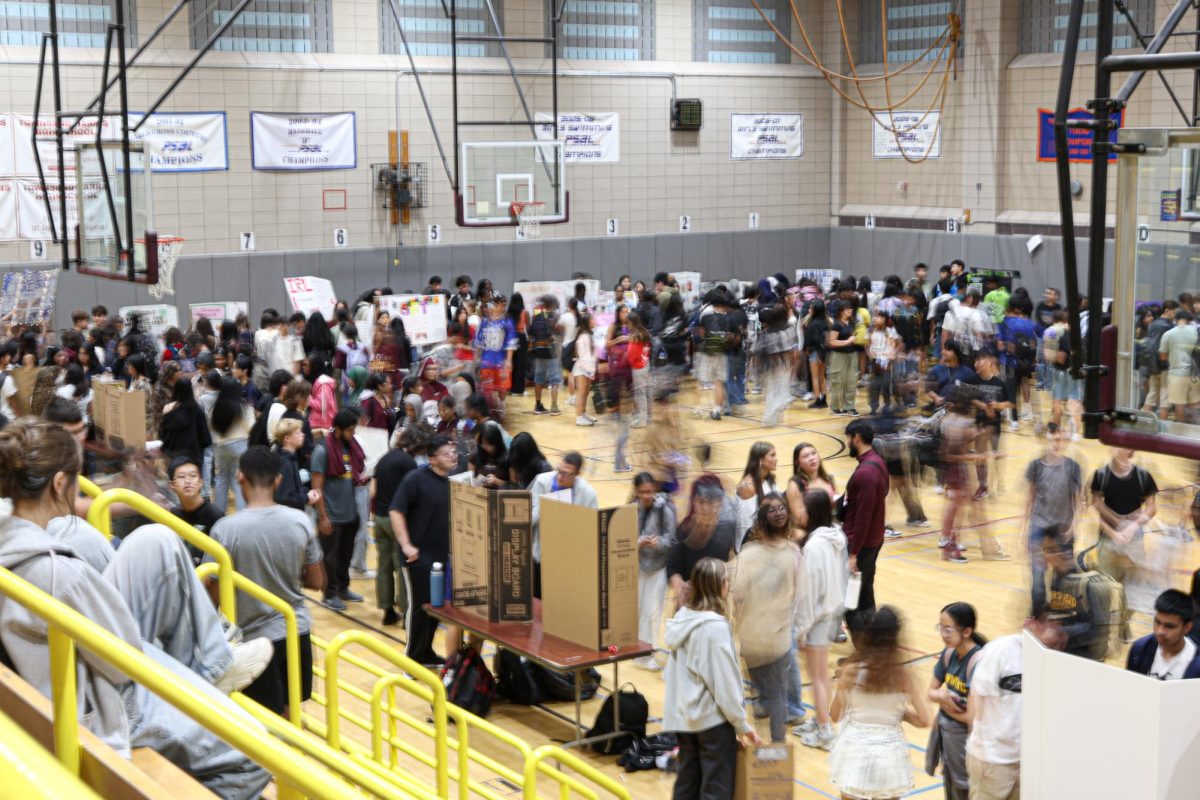









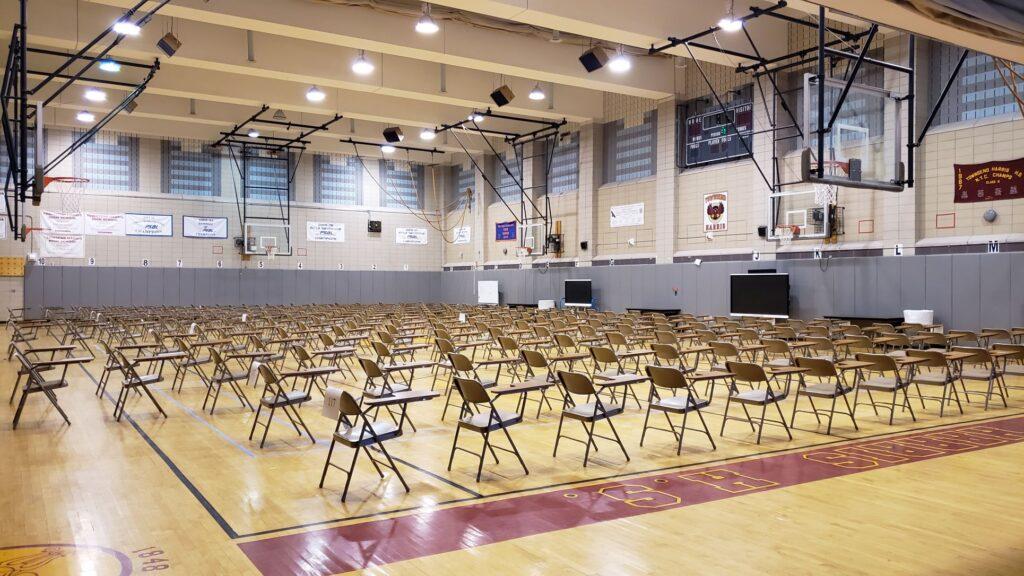

Every May, the gym gets cramped with students and many classes become empty. This describes the AP testing weeks at Townsend Harris High School, where students often take multiple cumulative exams for college level classes that determine whether they get college credit depending on the score they get and the credit policy of the college they’re applying to.
There are currently 25 AP classes offered at THHS, each with its own unique test. Some classes, such as AP Physics C, have multiple exams at the end of the year, meaning that test coordinators have to allocate time for over two dozen exams over the course of two and a half weeks.
AP test coordinators Katherine Gelbman, Aleeza Widman, Assistant Principal of Instructional Support Services Alanna Rice handle the logistics of AP exams to ensure students have a smooth experience.
Ms. Rice said that her role is to “hire proctors from outside the school building, secure rooms for testing and testing accommodation rooms, create the proctoring schedule and support schedule for school aides, and send out communication to families and students.”
Additionally, she said she is responsible for organizing testing dates, providing secure, updated devices for students who do not have their own, and working closely with The College Board in the weeks leading up to the exams. Additionally, Ms. Rice and the AP test coordinators are responsible for a massive amount of troubleshooting before, during, and after every exam.
“It’s just an exorbitant amount of work, really it is,” Ms. Widman said. She described the paper exams as being especially labor-intensive. “Organizing all the exams that are on paper, the labels, [is] a lot of details.”
Despite these difficulties, the test coordinators find the work rewarding, and said their goal is to help as many students as possible if any problems arise relating to the AP schedule and testing. “I enjoy being a testing coordinator,” said test coordinator and ISS English teacher Ms. Gelbman. “It’s wildly busy and testing days are very hectic, but I truly enjoy helping students have the best possible testing environment so that an already stressful event is hopefully a little more comfortable.”
Students and teachers acknowledge the important role the AP test coordinators play at THHS and how their role eliminates some of the stress. Frank McCaughey, a teacher for two AP courses, AP US History and AP Seminar said, “we must have thousands of AP tests that are taken each year, so to schedule that and coordinate that is a huge undertaking.”
Similarly, junior Albert Khyan said that “because AP season it’s hectic, it feels stressful,” but he said that the test coordinators do a great job of keeping students up to date on everything they need to know about preparing for and taking Advanced Placement exams.
Senior Jacob Palese said that the stress load of taking multiple AP exams was manageable, however. “I feel the school has taken steps to help AP students deal with the amount of stress and workload,” he said.
Even freshmen who do not take AP courses understand the importance of the test coordinators, as did Jean Araujo, who said, “I think they’re important to see how everything functions and works.”
Reflecting on the AP tests, Ms. Widman said that everything went well except for the AP Spanish Language and Culture exam, especially during the audio portion. According to Ms. Gelbman and Ms. Widman students experienced a variety of issues, from “confusion with the recording process for the speaking portion of the exam,” to “having a hard time hearing things” in the library.
Junior Humayra Bhuiyan shed more light on the difficulties faced during the AP Spanish Language and Culture test. She said the library’s audio issues were a problem, as was the divided layout of the space. The layout issues ensured instructions had to be repeated separately to different sides of the room. According to Humayra, this led to delays in the exam time.
Acknowledging these difficulties, Ms. Gelbman said, “The language exams that have listening and speaking portions have historically been difficult because of space constraints and the requirements of the exam.” To resolve this issue, students were given “the option to retake it in a smaller environment, and about half of the students opted to do so,” said Ms. Widman.
“I think that was a good outcome, and luckily, next year, the College Board will not be administering the exam in that fashion,” she said. “It will be a digital exam through bluebook like the other test, so, problem resolved permanently.”