
![Incoming Student Union President junior Aki Bejamin and other SU candidates sitting on stage while waiting to give their speeches during the May 18 SU Debate. Aki said he plans to “burn [the SU] all down and start anew.”](https://thhsclassic.com/wp-content/uploads/2026/06/IMG_9600-e1782439128607-1200x1131.jpg)







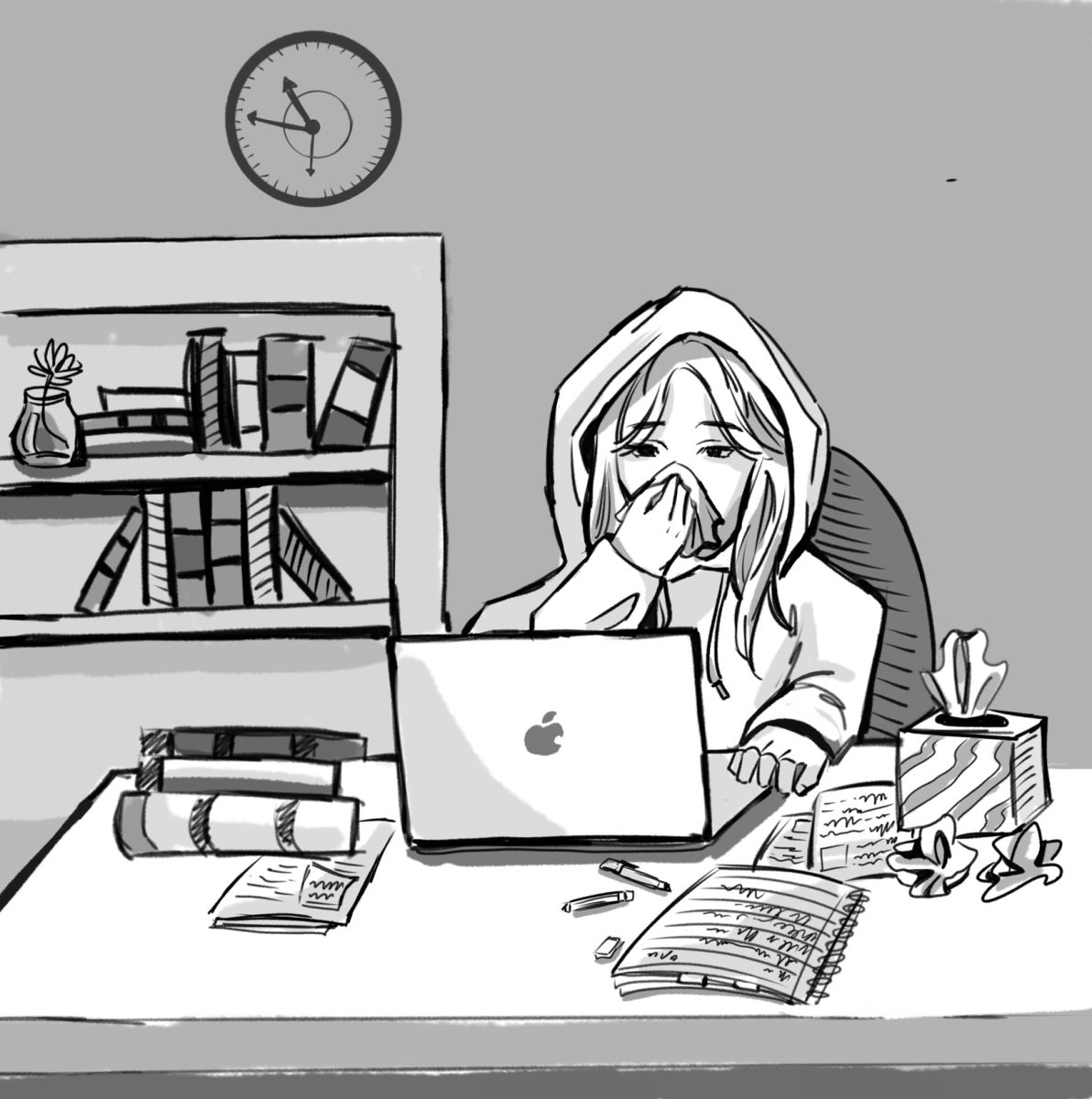
I wake up on a Tuesday morning, drenched with sweat and my head pounding. When I try to sit up, it feels as if I have been spun around relentlessly. When my mom enters my room, ready to allow the sunlight in, she takes one look at me and says:
“You cannot go to school.”
I lift my head and lean over to check my alarm clock. My head hits the pillow again after I see the time: 6:45 A.M. The next few hours feel like a fever dream as I shift in and out of sleep. At 10 A.M., I finally wake up, burning up even though the air conditioning is on. Curious, I hobble over to my phone to check my emails.
I have a worksheet, slides to take notes on, a homework assignment for AP World History, an Algebra 2 worksheet, and a presentation for my Health Education class all due tomorrow. I half-sigh, half-groan, dreading the rest of my day. Either I will have to spend hours making up work or rest while I stare at the ceiling, endlessly worrying about what the rest of my week will look like if I do not complete my assignments today.
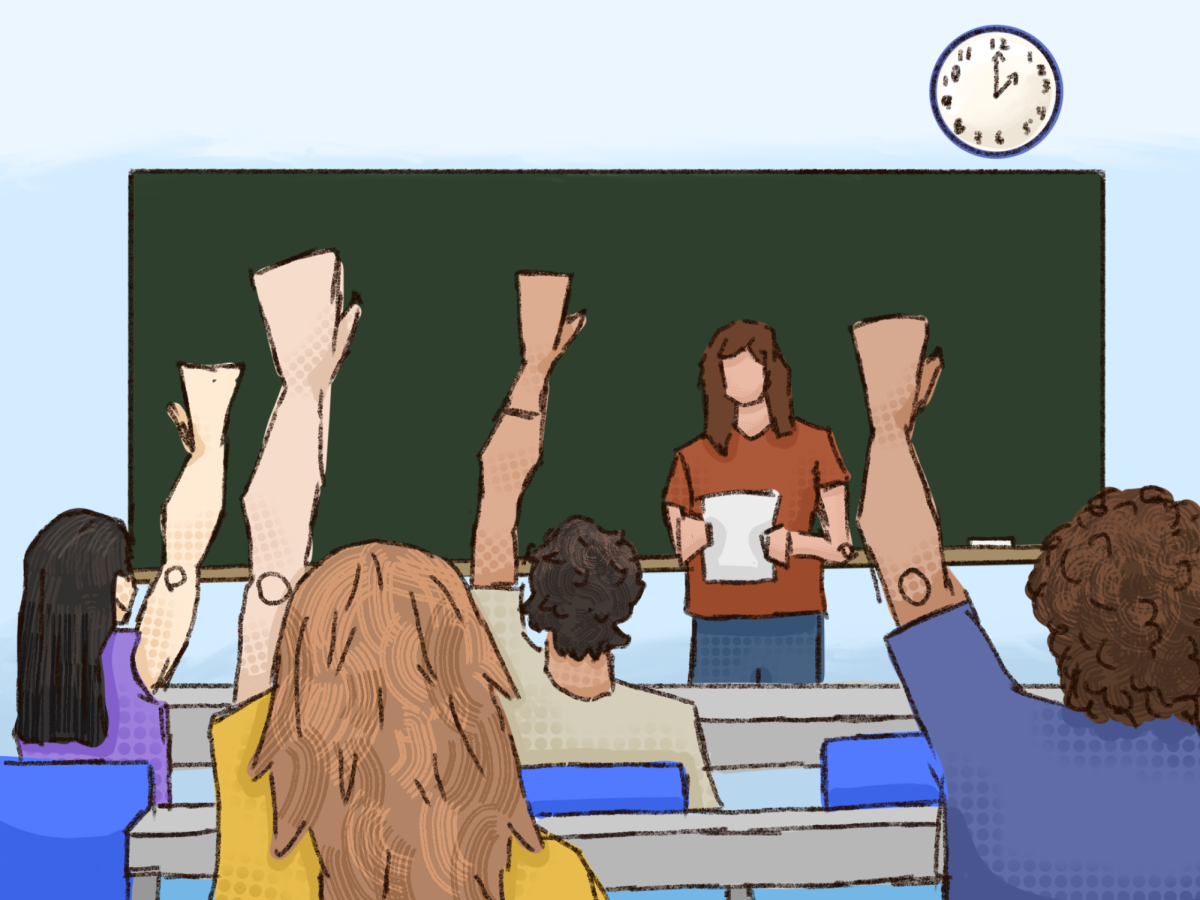
Unfortunately, this can be the reality for some students at Townsend Harris that take a day off because they are sick. Students intend to take time to recover, but instead spend their days emailing teachers for extensions that they should receive automatically. Without a direct policy on when late work can or should be submitted, it leaves due dates up to the teacher’s discretion, and forces students to have to communicate with their teachers when they are sick.
 THHS does not offer an official school-wide policy on sick days at the moment, and guidelines vary depending on the class, teacher, and department. There is a lack of a uniform policy for sick days and extensions that directly addresses frequent concerns of students. Instead the school grading policy vaguely states that “students are held responsible for reaching out to teachers if there is any foreseeable obstacle regarding an assignment before the due date.”
The different academic departments vary in terms of their contracts and agreements on the expectations for their classes. Non school-wide policies are unclear about extensions, or do not mention them at all.
In an AP World History class, for example, the course contract states students must “be present and follow attendance procedures. It is a student’s responsibility to make up missed assignments/work/assessments.” The document, however, does not specify when missing work from absences is allowed to be turned in and still considered on time. In a sophomore English class the course contract also does not directly address the policies for sick days and instead reiterates the school’s grading policy of communicating with teachers for extensions, with unexcused late work receiving a penalty. However, students should not have to spend their sick days off communicating with their teachers about receiving extensions for work they’ve missed.
An increase in clarity regarding the policy on sick days will reduce the pressure and stress regarding completing assignments students cannot understand or complete in time. This will also prevent students from having to spend their days off communicating with staff and students about extensions and missing work. Additionally, this policy can encourage students to stay at home and recover when they need to.
When possible, departments should provide a policy for what schoolwork can be excused if a student misses an assignment due to illness. Examples include a classwork assignment done the day a student was not present at school, or a homework assignment due the day that the student was sick. Otherwise, if an assignment cannot be excused, there should be a guaranteed, uniform extension across departments that provides three or more days to make up an assignment, and students should not be expected to communicate with teachers during sick days.