

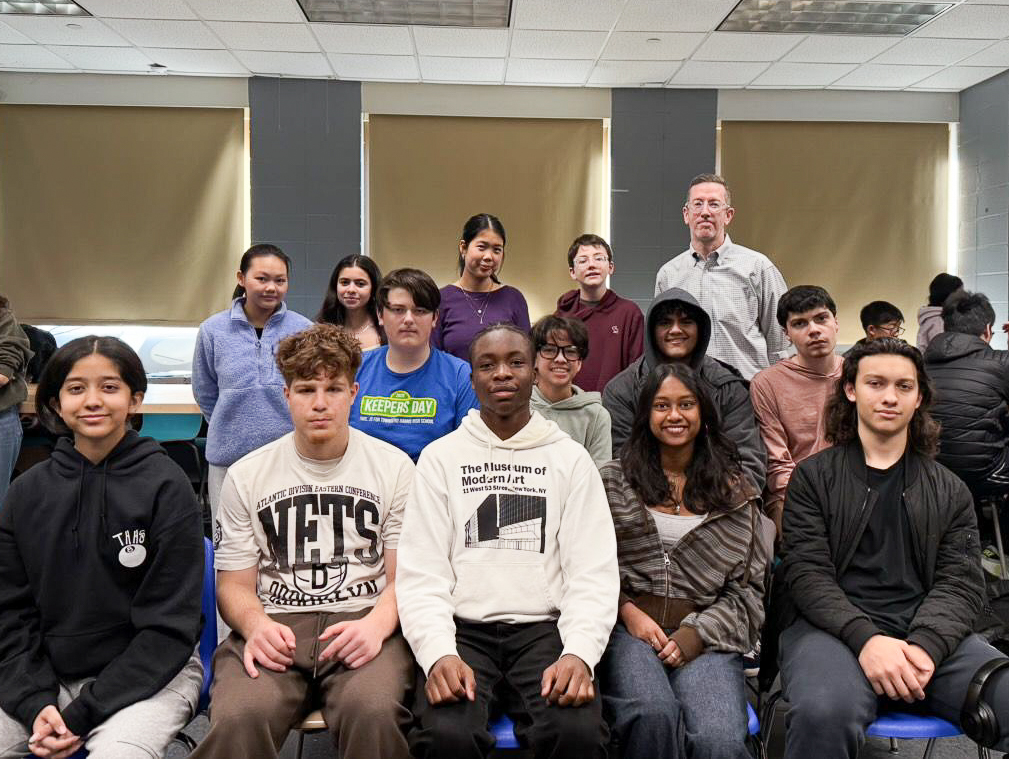





It’s not a surprise that students across New York state are not exactly thrilled after the new cell phone ban that passed this September. The ban, which eliminates the usage of personal devices in school, such as cell phones, laptops, smartwatches, and iPads, was implemented with the intention that students become more focused in the classroom, and less fixated on their personal devices. For a number of THHS students, however, the ban is bringing back memories from another time: middle school. The Classic spoke to four students about how their middle school experience with cell phones impacted how they view the current ban.
Even before this year’s ban, schools across the state had the power to limit cell phone usage in any way they felt necessary, leading to certain middle schools having heavier restrictions than others.
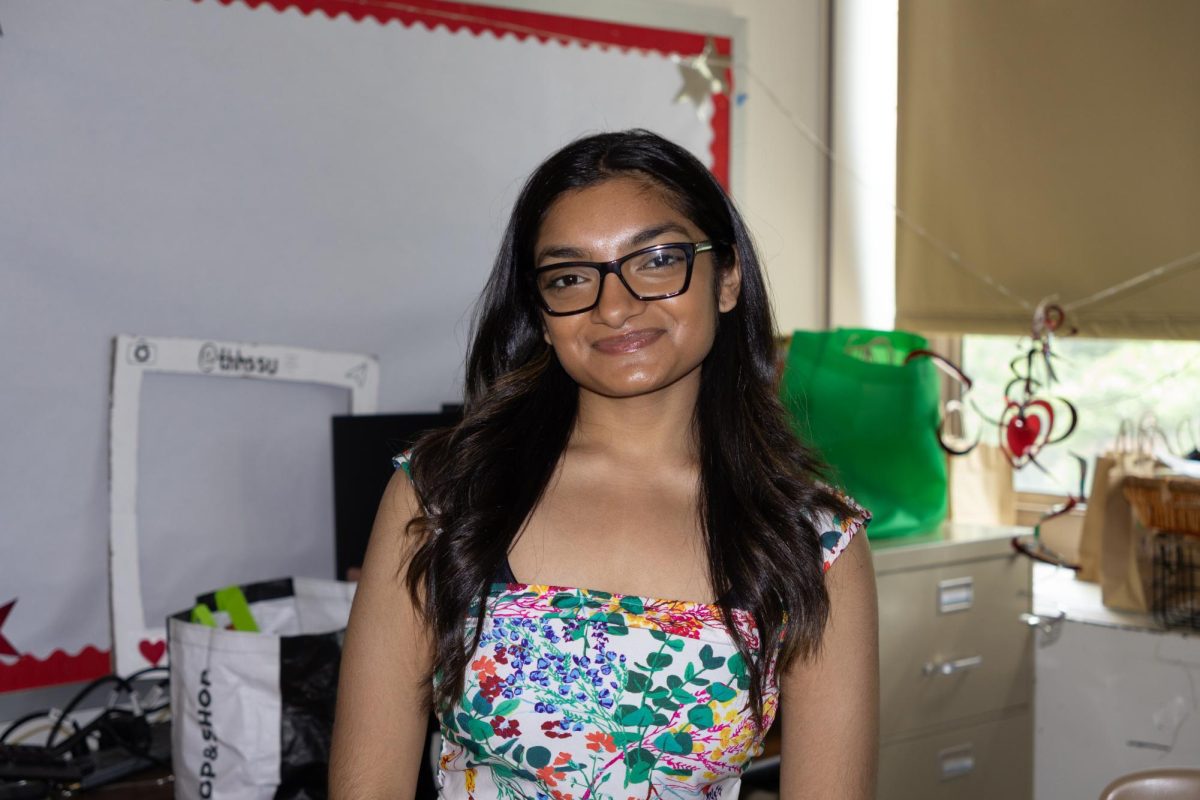
Senior Ananna Ali attended a middle school in Queens with a cell phone ban in place. She said that just like at THHS, students were allowed to bring their phones to school, but were prohibited from using them in class, and if they did, they “could get into serious trouble.” She said that, as technology was still essential for class assignments, students could only use school-approved devices such as computers and iPads. “But phones were strictly off-limits,” she said.
Ananna said the rigorous ban didn’t cause much difficulty during the school day for her, as “most [students] already had access to school devices, especially during the transition to online learning.”
“Middle school also had smaller, consistent class groups,” she said, “so it wasn’t like high school, where you’re constantly moving around or need to contact people.”
For Ananna, the ban in middle school didn’t impact her as much because she didn’t have a phone at the time. “I’ve been using my phone for the past three years,” she said, “so as a senior now, it feels inconvenient not to be able to check the time or quickly use it during breaks. It’s not horrible since we still have our devices, but it’s definitely a little annoying.”
Similarly, sophomore Marchella Ramos experienced an equally rigorous ban during her time at a different middle school in Queens. Marchella said her school’s policy gave “three chances” if the student’s phone was seen outside of their schoolbag: “The first was a warning, the second was that it would be taken from them until the end of the school day or…picked up by a parent, and the third, I believe, was detention.”
Like Ananna, Marchella said she had no issue with the policy, as at the time she did not have social media apps, like Instagram.
She said the policy was important to the general school culture: “I remember that every year or so, the school dean would do a presentation on digital citizenship to remind us of the way we use our phones outside of school, especially concerning cyberbullying, academic dishonesty, and inappropriate behavior.”
She provided an example of how she could take her phone out for educational purposes: “I took a photography class, and we often had to use our phones for the first few lessons before our teacher taught us how to use DSLR cameras.” She said on other days, school devices, like Chromebooks, were provided to students to use during class.
Marchella added that the phone ban allowed her to develop hands-on study techniques, rather than relying on online tools like Quizlet. She said she would frequently make physical flashcards, and use a pencil and paper to write, rather than type. This, she said, was why the new statewide cell phone ban was not a significant issue for her. “Of course, it’s a bummer because I can’t text during lunch, but it’s not the end of the world,” she said.
On the other hand, junior Humayra Bhuiyan, who attended a different Queens middle school, said that while her middle school’s cell phone ban required students to keep their cell phones away during the entire school day, many students did not follow the rule, believing it to be unfair.
Like Marchella, she said that the restriction still allowed them to use their phones for educational purposes, and it heavily depended on whether teachers preferred students to use their personal devices or not. “Some teachers were definitely less strict than others and would allow you to use your phone to take pictures of the board or do research,” she said.
She said that her middle school experience impacted her perception of the ban at THHS: “At first, I really disliked the cell phone ban at Townsend. […] I found myself always reaching for my phone because I was so used to it being in my side pocket, but honestly, it hasn’t been as bad as I thought. I think part of that is because we have been able to use personal devices [when necessary], so it’s not like we are completely restricted from being online.”
Humayra said that compared to the phone policy at her middle school, THHS had a stricter cell phone policy. She said, “[Now] it’s a law […] but even school-wise, I feel like teachers and staff are more strict about it than they were in middle school.”
Likewise, Ananna said that “[The ban at THHS feels] like a bigger adjustment than something [she is] used to.”
Junior Nana-Ama Kwarteng also said she had a cell phone ban during middle school. For Nana-Ama, however, the ban in middle school made the THHS ban easier: “Having a cell phone ban in middle school did prepare me for the one we have right now in THHS because it desensitized me from being away from my phone,” she said. “I was used to not being on my phone for long periods of time so not being able to use my phone now in high school doesn’t have too much of an effect on me.”
Marchella said that a moment earlier this year during her health class when she watched a video that urged people to “look up” from their phones to see the beauty of the world has stuck with her. “While it might be horrible for some, the [current] phone ban [has] helped me think more deeply about my own relationship, or attachment, to my phone and social media,” she said.